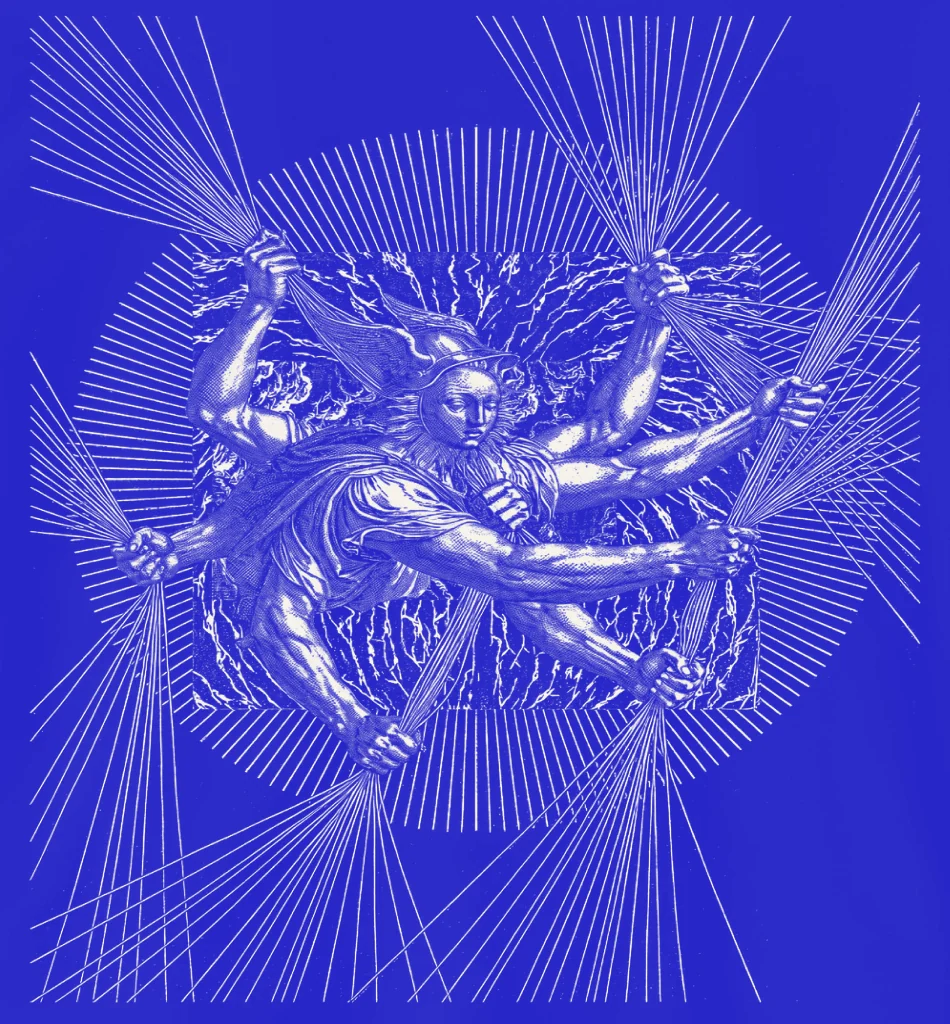
“Great minds discuss ideas, average minds discuss events, small minds discuss people.” The saying has it backwards. An idea doesn’t fall from the sky. It comes out of a particular person, with a particular body, particular drives, and a particular stake in the outcome, and it tells you more about that person than about the world. The serious way to judge an idea is to start by asking who is speaking. Great minds discuss people.
A saying about people
Start with the saying itself. It gets pinned on Socrates, though it appears nowhere in Plato, and on Eleanor Roosevelt, who didn’t coin it either. The earliest known version is in a memoir published in 1901 by Charles Stewart. He recalls the historian Henry Thomas Buckle, a dinner guest, saying “in his dogmatic way” that men and women fall into three orders of intelligence. The lowest always talk about persons, the next about things, and the highest prefer to discuss ideas.
Stewart liked the line as a test of his friends’ mental calibre, but he didn’t swallow it whole. Anyone incapable of “a little intermingling of these condiments”, he added, would soon be “consigned to the home for dull dogs.” A conversation that is nothing but ideas is a lecture, and a lecture is as tiresome as gossip.
There are two ironies here. Buckle’s line was taken from him and handed to more famous people, which is at least consistent with his advice to forget the person and keep the idea. And the line itself is about people. Its subjects are three kinds of human being, and its whole use is to sort the person you’re talking to. Buckle’s highest wisdom turns out to be an exercise in psychology.
Psychology first
Nietzsche made that exercise into a method. At the end of the first part of Beyond Good and Evil he declares that psychology should again be recognised as the queen of the sciences, because it is now the path to the fundamental problems. The old queen was theology: begin with the order of the universe and work down. Nietzsche begins with the mind that claims to have found that order.
Early in the same book, he says what he has come to see in every great philosophy so far: “the personal confession of its author and a kind of involuntary and unconscious memoir.” To understand how even the most abstract metaphysical claim came about, he says, first ask what morality it is aiming at. He doesn’t believe a drive to knowledge is the father of philosophy. Some other drive has used understanding and misunderstanding as its instrument.
The charge isn’t deliberate deception, though that happens too. It’s that thoughts are produced by a body, driven by impulses the thinker can’t see. Nietzsche called us clever animals that invented knowledge. Nothing in nature selects for creatures that grasp the truth for its own sake. Truth gets selected only insofar as it helps us survive and prevail, so the will to truth is one more form of the will to power. Deleuze put the consequence neatly: we always have the truths we deserve, given who and what we are.
So the central question isn’t “what?” or “why?” but “who?” Who is making this claim, and what does it do for them? That applies to yourself first, and that’s the hard part. Your own thoughts don’t arrive stamped with their origin. The anxious thought doesn’t come labelled “you slept badly”, and the irritable one doesn’t say “you skipped breakfast”. Each presents itself as a plain view of reality, and because it’s yours, you trust it. Asking which drive in you is doing the philosophising is uncomfortable, because it chips away at the pride we take in being conscious, rational agents. If our thinking is driven by things beneath reason, the idea of a free, fully responsible will looks much shakier, and so does the morality built on it.
The philosopher at the wheel
Nietzsche’s best case study is Schopenhauer.
Schopenhauer’s philosophy is pessimistic. Desire can never be finally satisfied. A wish either goes unmet or is replaced by a new one the moment it’s met, so desire means suffering, and the only release is to quiet desire itself. The parallels with Buddhism are real, and he knew it.
His metaphysics underwrites the ethics. The world of objects is representation, something the intellect builds from sensation. But there is one object we also know from the inside, our own body, and from the inside it is will: striving, craving, push and pull, before any thought. Schopenhauer generalised from that. The inner nature of everything is will, blind and self-perpetuating, at bottom a will to live.
If everything, including us, is will, escape has to come through the other faculty, representation. Art is one route. In aesthetic contemplation we lose ourselves in pure form and look without wanting. Schopenhauer admired the Dutch still-life painters for exactly this, for finding calm, objective beauty in the most ordinary objects. Tellingly, he objected when they painted food realistically enough to make the viewer hungry, because then the will crept back in. The painted object has to be something you contemplate, not something you crave. Practised long enough, through art, asceticism, and meditation, this will-less state can weaken the will to live itself. He thought that was what every great religion was really after.
Follow the ethics through and it gets harsh. If life is suffering, making new life is the worst thing you can do. Sexual desire becomes the purest form of the will’s tyranny, and Schopenhauer’s contempt for women, whom he saw as nature’s instrument for keeping the species going, follows naturally.
In the third essay of On the Genealogy of Morals, Nietzsche doesn’t refute any of this. He looks at the man. Schopenhauer, he notes, speaks of nothing with more assurance than the power of aesthetic contemplation to counter sexual interest. Nietzsche asks whether the whole idea of will and representation, the thought that redemption from the will comes only through representation, might be a generalisation from that sexual experience. He adds that it was the conception of a young man of twenty-six. Then he tells us to listen to the tone, the suffering and the gratitude, in Schopenhauer’s own words about the aesthetic state:
This is the painless state which Epicurus prized as the highest good and as the state of the gods. For that moment we are delivered from the miserable pressure of the will; we celebrate the Sabbath of the penal servitude of willing; the wheel of Ixion stands still.
Ixion was a king whom Zeus welcomed to Olympus and who repaid him by trying to seduce Hera. His punishment was to be bound to a burning wheel that turns forever through the sky. Of all the images Schopenhauer could have chosen for relief from the will, he chose a man tortured eternally for lust. It’s the Western picture of samsara, and it’s a confession.
The pattern is a familiar one in human psychology. People who describe their desire as a raging demon tend to be the ones most in its grip. A man who felt utterly enthralled by women could easily come to see them as agents of the force enslaving him. Schopenhauer’s lifelong problem was finding relief from an urge he hated, and he found it, more than anywhere, in art. Read that way, his system turns his own struggle into cosmology: escape from will through representation, from appetite into the still world of the painted apple. Ideas that look perfectly dispassionate turn out to be one side of a war between the passions.
The source in the idea
Nietzsche ran the same test on Epicurus, Kant, and Socrates himself, and drew generalisations from it. Philosophies that rank a world beyond above this one, he argued, are the product of a body in decline, the philosophy of old age and sickness. His master and slave moralities make the same move at the scale of society: where you stand in a hierarchy shapes what you call good.
None of this means every idea is just a symptom, or that an argument fails because of who made it. It means the separation Buckle took for granted isn’t available. If people had a faculty that weighed evidence with no stake in the result, ideas could be judged apart from the people who held them. We don’t. Perception itself is filtered through what we are, so an idea carries the marks of the drives that produced it, and reading those marks is part of understanding it, whether the idea belongs to a dead German pessimist or arrived in your own head this morning.