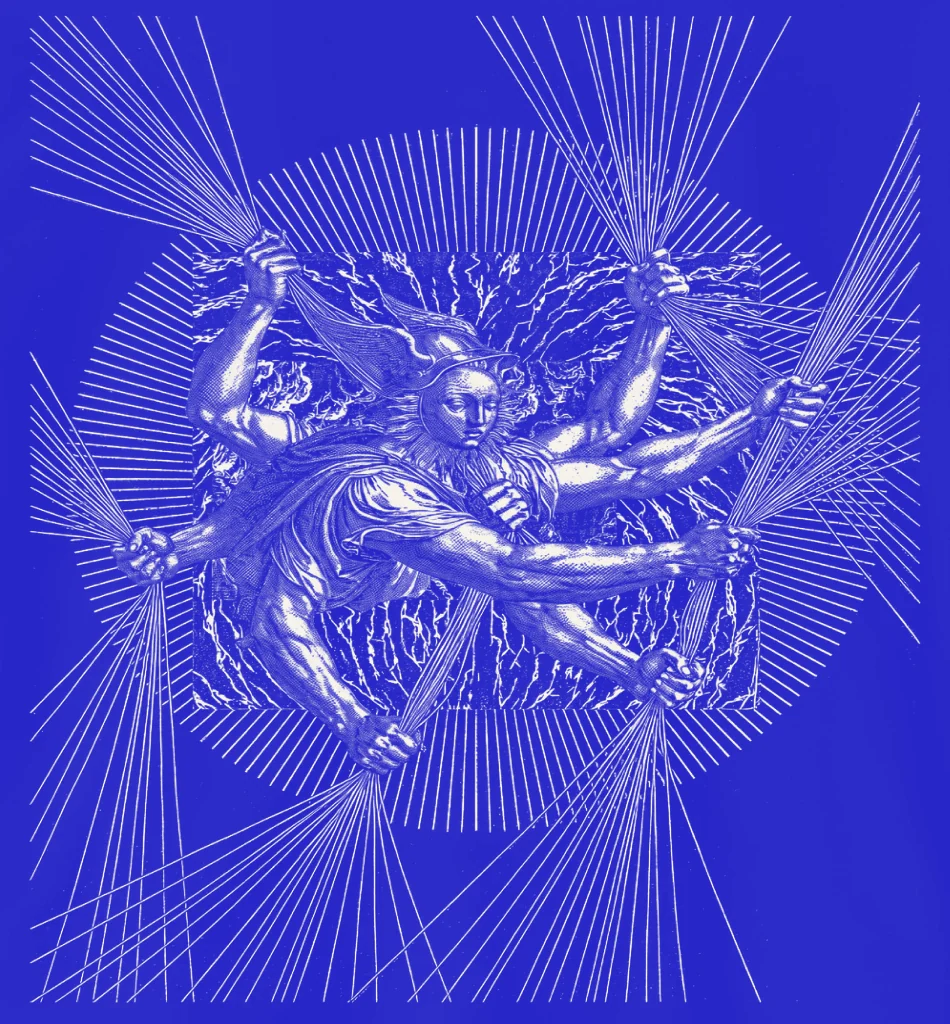
Public opinion isn’t something a society has. It’s something that gets made for it. Most people think they arrive at their tastes, purchases, and political views on their own. In fact, a small number of people who understand mass psychology have usually got there first. Edward Bernays, the father of public relations, saw this clearly a century ago and, unusually, said it out loud. He’s unsettling to read because he’s mostly right.
The invisible government
Bernays opens Propaganda (1928) with the claim that we are governed, our minds moulded and our tastes formed, largely by men we have never heard of. He meant it literally. Behind the fashions people follow, the products they buy, and the causes they back stands an “invisible government” of advertisers, publicists, and opinion-makers. Its decisions reach the public as what feel like free choices.
It sounds conspiratorial until you test it on yourself. You drive past a billboard for burgers, and a few days later you find yourself in the drive-through, sure you went because you felt like a burger. Someone wanted you to feel that way and paid for the billboard. The desire was real. Its origin wasn’t you.
What makes Bernays dark is that he saw no problem in this. He didn’t present it as a flaw in human nature to be guarded against. He presented it as a fact to be used, and he offered himself for hire as one of those invisible rulers.
Selling the dream
Bernays was Sigmund Freud’s nephew, and he took from his uncle the belief that people are driven far more by emotion, symbols, and unconscious wishes than by argument. Logic persuades almost nobody. To move a crowd, you work on the group mind.
So you never sell the product. You sell what it stands for. Nobody really wants a hat. They want what the hat says about them. Nobody goes to the opera only for the music. They go for the status it confers. If people don’t want your product, that isn’t a barrier. You change what it means to them, and they come round to wanting it. Coca-Cola has done this better than anyone. It doesn’t sell sugary brown water. It sells Christmas and good cheer, and a whole way of being.
His most famous campaign shows the method. In the 1920s smoking in public was taboo for women, and that kept half the market closed to the American Tobacco Company. Bernays recast the cigarette as a symbol of female liberation. At New York’s Easter Parade in 1929 he had young women light up on Fifth Avenue as “torches of freedom”, and the press covered it as news. Refusing a cigarette now meant refusing freedom itself.
Propaganda without the stigma
To Bernays, propaganda was simply an organised effort to spread a doctrine or a practice. It was a neutral technique and an unavoidable one in any large society. He had learned it working for the American government’s propaganda committee during the First World War, and the word was already turning sour by the time he wrote his book. That’s why he rebranded the trade as “public relations”. The Second World War, the Cold War, and Orwell finished the job of making the word sinister.
Unlike most theorists of crowds, Bernays was a committed democrat. In a mass democracy, leaders can’t rule by decree, so they have to win support. Organised persuasion, in his view, is how democracy works at all. He called it “the engineering of consent”, and he thought it was a civic duty for those who understood the public mind. He acknowledged the moral questions about who uses these tools and for what. His own record doesn’t inspire much confidence that he took them seriously. He sold cigarettes to women, and in the 1950s he ran the United Fruit Company’s campaign to paint Guatemala’s elected government as a communist threat, in the run-up to the CIA-backed coup. He later learned that Goebbels had kept his books in his library.
The same thinking lives on in modern government “nudge units”, which use behavioural psychology to steer citizens towards approved choices. Whether that’s good governance or manipulation is exactly the question Bernays never quite answered.
Opinion doesn’t exist until it’s made
Walter Lippmann had argued that the public is a phantom, that ordinary people don’t have informed opinions on most public questions and that experts must inform them. Bernays went a step further in Crystallizing Public Opinion (1923). The public doesn’t need informing. It needs forming. Ask people in the street what they think about most issues and they don’t know, so someone has to tell them.
That turns politics upside down. A leader is told a policy is impossible because the public is against it. The Bernaysian answer is to give it six months. Public opinion isn’t a wall. It’s a canvas. Almost every great change starts with most people opposed, and the opposition is overcome by people who change what the public dreams about, not by people who win the argument on points. The PR man doesn’t find an audience. He builds one.
The toolkit
Authority. People defer to doctors, scientists, and celebrities. A CEO pitching his own product puts the audience in a defensive, sceptical frame. A seemingly independent expert gets past that resistance. Bernays sold bacon by asking thousands of doctors whether a hearty breakfast was healthier than a light one. When they agreed, newspapers ran the story, and bacon and eggs became the American breakfast. Celebrity endorsement predates him, but he turned the trusted third party into a system. Pro wrestling calls it “the rub”: the established hero brings in a new tag-team partner, and the crowd likes the newcomer because the hero does.
The frame. The strongest persuasion comes before any advertisement does. Feed journalists ready-made interpretations and friendly experts, and you set the frame through which the public sees everything that follows. Imagine a dairy industry losing ground to oat milk. First, research on the benefits of milk appears in the journals. Then science correspondents report that scientists have rediscovered it. Commentators start praising it, and perhaps the government endorses it. By the time the actual ad campaign launches, the public is already primed. Coverage like that is worth more than any paid placement, because it looks objective and arrives through channels people trust.
The poll. A poll is supposed to measure opinion. Bernays saw it could create it. Commission a survey, word it carefully, and get the headline repeated everywhere: eight in ten people now support whatever it is you’re selling. Most people don’t want to be outliers. Once a view seems to be what everyone thinks, holding the opposite one looks eccentric or bigoted. So people adopt it, and the poll comes true after the fact.
He used the same few techniques for everything: cigarettes and bacon, soldiers and presidents, social causes. The public relations, advertising, and political consulting industries that grew out of them still shape what we eat and smoke, how we vote, and which opinions we feel safe holding. Anyone who wants to change a mass society has to reckon with that, and that includes people who find the method repugnant. Being right and waiting for the public to notice isn’t how change happens.