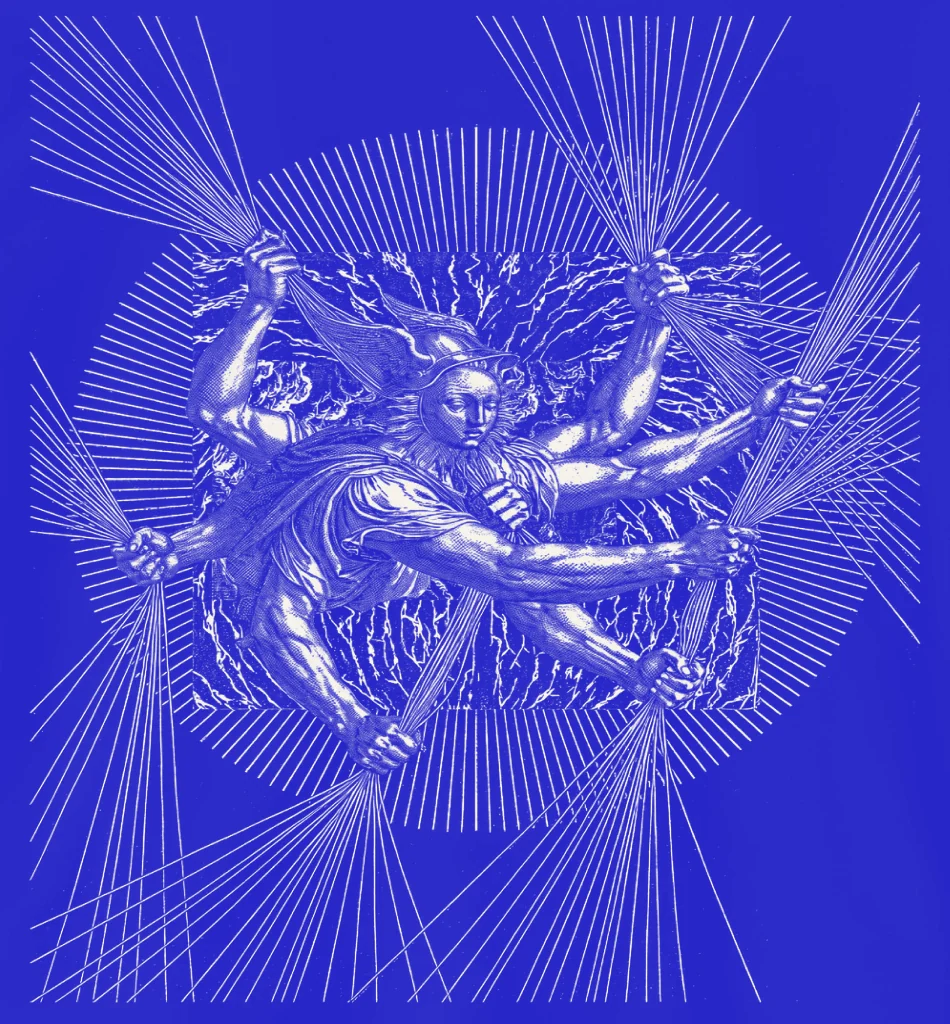
Absolute monarchy beats parliament. The case doesn’t rest on tradition, divine right, or nostalgia. It rests on the same thing liberals build everything on: individual self-interest. Follow that logic honestly and it doesn’t end in checks and balances. It ends with one ruler. Thomas Hobbes saw this in the seventeenth century, writing in the wreckage of the English Civil War, and the argument hasn’t aged a day.
Order comes first
Take away the common power that keeps people in awe and you get the war of all against all: no security, no industry, no culture, only fear and the constant threat of violence. This isn’t a thought experiment. You see it wherever law and order break down. Looting follows riots within hours. Civil wars produce it for years, as England learned in the Wars of the Roses and again in the Civil War. It never lasts long, because in Somalia, Rwanda, and every collapsed state some warlord or strongman soon carves out territory and rules it. But the glimpse is enough. It shows what people are like without a sovereign.
The fear this creates isn’t cowardice. It’s rational. Nobody can fight off every looter, burglar, or invading army alone, and nobody wants to live where the authorities look the other way. Banding together under a power that protects you is the most basic act of self-interest there is. The man boasting about the rifle on his farm is fooling himself.
There can be only one
Out of that fear people authorise a sovereign, and the sovereign has to be single and undivided. Split power between king and parliament, or across courts, chambers, and branches, and you rebuild the conflict the whole arrangement was meant to end. Checks and balances don’t remove the struggle for power. They make it permanent.
Anyone who has run a business or even a chess club knows this. Without one person who has the final say you get bickering, unresolved problems, and endless can-kicking, until people leave or the whole thing falls apart. In business, the single owner who decides routinely beats the committee of regional interests that can’t decide.
The same goes for every rival claim to authority. A church that sets itself above the sovereign is a standing source of civil war, as the Gunpowder Plot showed. Religion has to be subordinate to civil peace. Justice isn’t a separate branch either. Kingship began with judging disputes, and for centuries the king’s court travelled the country hearing petitions in person.
Every member is a court
The strongest argument against assemblies is corruption. A king has one court. An assembly has hundreds, because every member is a little court of his own, with advisers, donors, and ways in. Factional interest isn’t a flaw in the system. It is the system. Look at devolution in Britain: the Welsh and Scottish parliaments became new nodes of patronage that did little for Wales or Scotland and a great deal for the people who sit in them.
A monarch also owns the long term. His stake in the realm is personal and hereditary, and if he rules badly he fears for his life. Elected politicians have none of that. They plan to the next election, then move on to the next job. A prime minister treats the office as a gap year and leaves for the private sector. Meanwhile the rulers of China and Russia have watched a long line of British prime ministers come and go. If the real power sits with a permanent bureaucracy instead, democracy is worse still. It runs on bad faith, putting a puppet in front of the cameras while hiding who actually decides.
Law is a command
Law isn’t discovered by reason. It is commanded by the sovereign and made real only by enforcement. Whatever is written in the statute book or the constitution, the actual law is what gets enforced. Old laws sit on the books and are ignored, and things with no legal basis are enforced as if they were statutes.
The pandemic proved it. Activists insisted mandates had no legal basis. It didn’t matter. The decree came, and everyone behaved as though it were law, because that is how power works. You know a system by what it does in a crisis.
Freer under a king
This sounds totalitarian until you see the paradox. One man can’t rule on everything, and where the sovereign has not commanded, the subject is free. A king’s reach is small. A parliament is a machine for producing laws, and it never stops. After years of grim Puritan rule, England got its king back and its parties too, and a subject of the restored monarchy could get away with almost anything. Ask honestly whether people are freer to speak and live as they like now.
Where this leads
Good order takes the fear everyone already has and turns it into civil peace. The state is an artificial person made of all its subjects, and it outlives every individual ruler through succession. Rebellion against it is self-defeating, because it means revoking your own consent. The liberal starting point, the self-interested individual who wants to live and prosper, leads straight to the one thing liberals fear most.
Divide power and you get endless conflict. Unify it and you get peace.