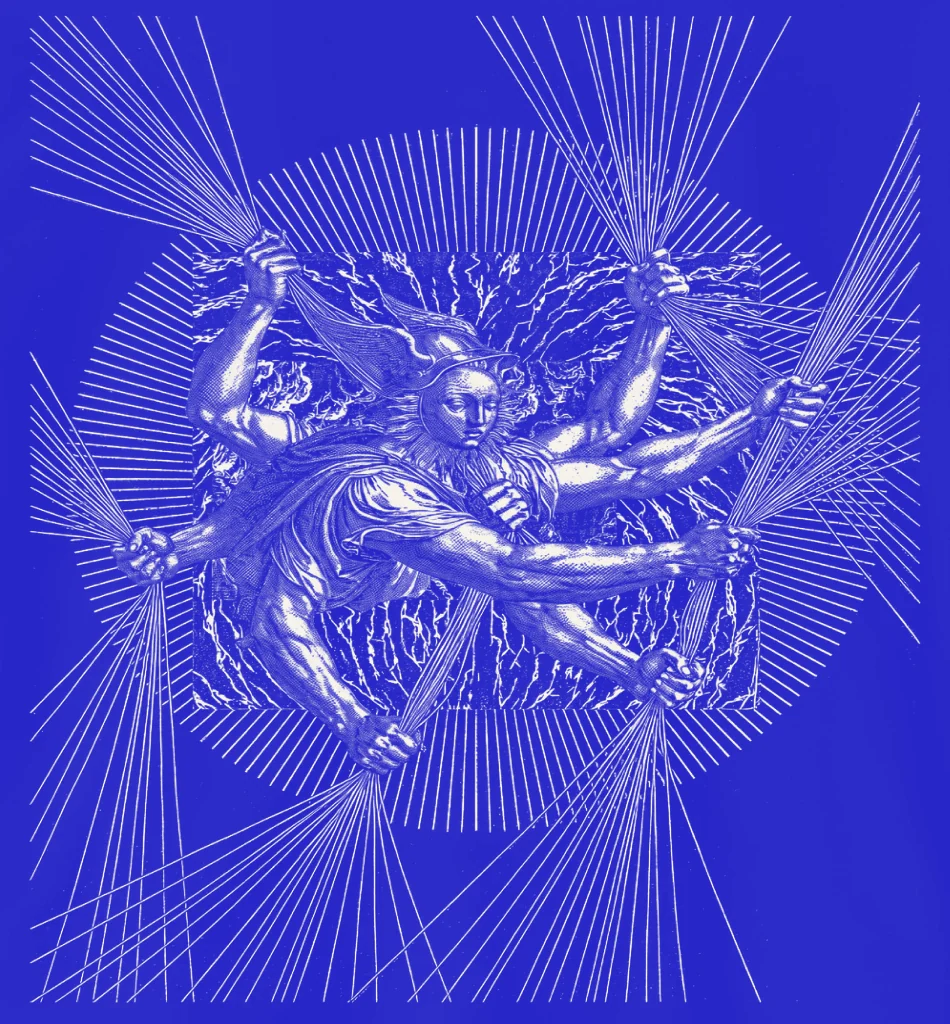
Every society is ruled by a minority. Always has been, always will be. Gaetano Mosca put it bluntly over a century ago: every organised society divides into a small political class that rules and a large majority that is ruled. Democracy doesn’t abolish that division. It just gives it a better story.
The organised minority
The minority wins because it is organised and the majority isn’t. A hundred trained soldiers will beat a crowd of three thousand ten times out of ten. Politics works the same way. A small group that shares information, coordinates, and acts together will always beat a mass of people who each act alone.
The pattern holds at every scale: the nation, the company, the football club, the local chess society. Thousands of years of political theory and practice have produced no way of turning the pyramid upside down. Revolutions replace the people at the top. They don’t remove the top. This isn’t cynicism. It’s simply what the historical record shows, read as it is rather than as we’d like it to be.
The political formula
No ruling class survives on force alone. It needs a political formula: the legitimating myth that explains why it rules. Kings had divine right and the great chain of being. As long as most people accept the formula as just, they accept the rule.
Our formula is popular sovereignty: leaders rule because we chose them and they serve our will. It is the easier of the two to disprove. You can’t prove God didn’t send Charlemagne, but you can measure whether governments do what voters want. A major study of 1,779 policy issues in the United States found that the preferences of average citizens have a near-zero independent effect on what becomes law. Add a system that rewards whoever promises most convincingly, then forgets the promise once in office, and the formula falls apart.
The formula isn’t organic. It is manufactured through schools, television, the press, and the things parents repeat to their children. That is also the ruling class’s weak point. When the manufacture of consent fails, rulers are in real trouble. The West’s formula has been in exactly that crisis for a decade. The old myths of the will of the people, liberty, and the American Dream had already worn thin, so the elites tried to install a new formula: woke ideology. It provoked so much backlash that they have been abandoning it ever since. Now they are propping the old myths back up instead, and the populist turn in Washington is the vehicle. So far it has contained popular discontent remarkably well.
Elections change the faces
Plenty of people grasp this in theory and forget it the moment an election starts. Suddenly it’s red against blue, left against right, as if the ruling class weren’t one class. Elections change the faces. They don’t change the structure. The ballot paper is a political formula, not a transfer of sovereignty.
Swap one party’s president for the other’s, or one party’s prime minister for the other’s, and the same financial interests get the same meetings. The head of the world’s largest asset manager sits down with every one of them. Take away the Punch and Judy show and it’s obvious who rules: today the very top is held by mega-wealthy financial interests, as it was once held by warriors and kings, or by priests in a theocracy.
Below them sits a much larger non-governing elite: journalists, professors, lawyers, civil servants, intellectuals. These are the people whose livelihoods depend on the current structure. They produce the justifications and keep the formula running. The small elite at the top can’t rule without them. If it lost them, the regime would be finished.
Closure and renewal
Left alone, every ruling class tries to close itself off. Legacy families, hereditary succession, exclusive institutions, and closed networks all police the boundary. This is how aristocracies form, and it’s corrosive. A closed elite grows inefficient, then tyrannical, and finally runs society purely for its own benefit.
A healthy society keeps routes open for talent to rise. Imperial China had its examination system. The British ruling class survived for centuries by absorbing whatever force was rising: the merchants, the industrialists, the unions, even the Labour Party. Insiders always resist renewal, and outsiders rarely have the organisation to force their way in. When the door stays shut too long, the pressure builds until it ends in rupture.
Where this leads
Rule needs both force and consent: the monopoly on violence underneath, the political formula on top, and a cohesive minority binding them into a stable order. Liberal institutions claim to be neutral referees of open competition. They aren’t. They exist to promote liberalism and won’t tolerate anything else.
So the fate of a society doesn’t depend on its constitution or its elections. It depends on the quality of its elite: whether that elite is open and adaptive, or closed and brittle.
The question was never whether a minority rules. It’s which one, and whether it’s any good.